




Masjid Engku Haji Mahmud
The Engku Haji Mahmud Mosque and Rumah Jambi: The Legacy of the Jambi Community in Kemaman
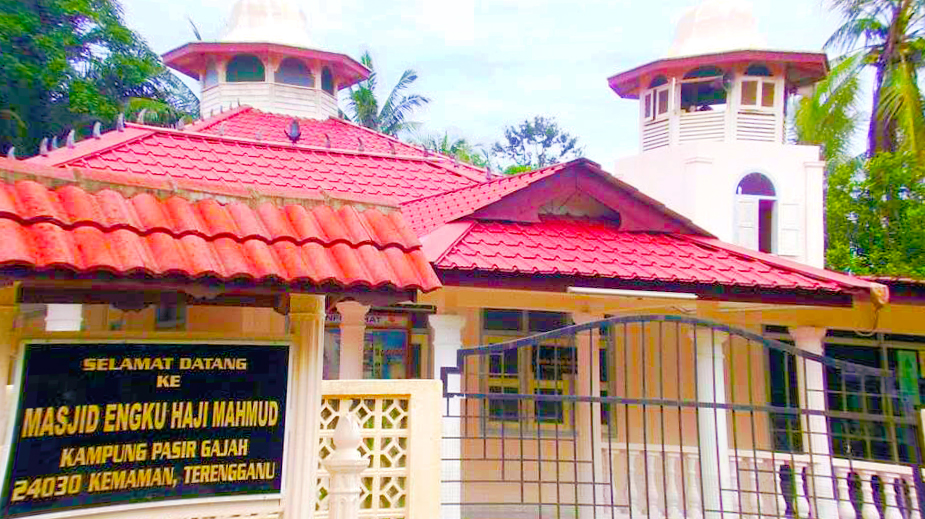
The Engku Haji Mahmud Mosque and the Jambi House (Rumah Jambi) stand as significant heritage sites of the Jambi community in Pasir Gajah, Kemaman, Terengganu.
Kampung Pasir Gajah is located approximately 17km from the town of Chukai. The village was first explored in 1939 by Engku Haji Mahmud, a prominent religious figure from Jambi, Sumatra, along with ten of his followers. Consequently, the village still retains residential architecture influenced by the Jambi heritage, a direct result of their migration to the area.
A primary attraction for historians and researchers in this village is the Engku Haji Mahmud Mosque, also known as the Jambi Mosque. Constructed in 1939 shortly after the village was founded, the mosque was built through the collective effort (gotong-royong) of Engku Haji Mahmud and his followers. The prayer hall can accommodate approximately 500 congregants at a time. During its early years, the mosque served not only as a place of worship but also as a center for teaching the Al-Quran, Fardhu Ain, and Fardhu Kifayah.
Situated along the riverbank—once the primary transport route for residents—this mosque is considered one of the most unique in Terengganu, adorned with carvings that reflect the identity of the Jambi people. During restoration works several years ago, much of the original materials were preserved, maintaining the integrity of the intricate carvings on the pillars, walls, and roof. A pair of authentic buffalo horns, the traditional symbol of Jambi heritage, remains firmly preserved at the peak of the minaret and the mosque's dome.
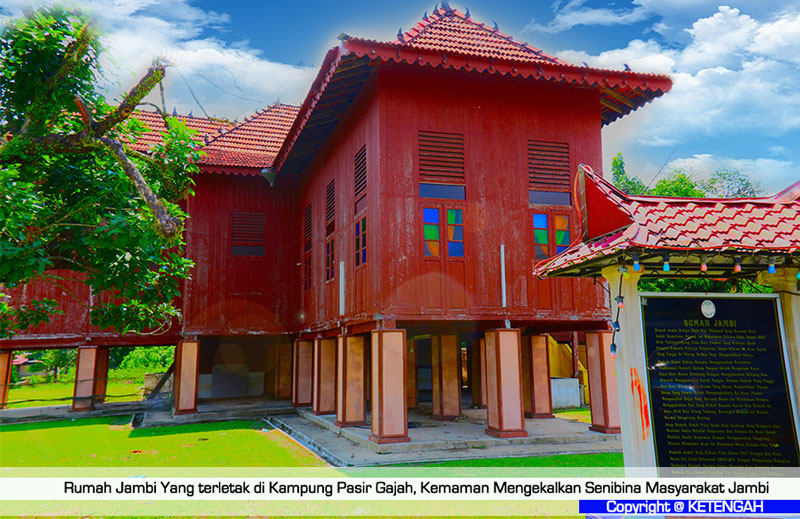
It is vital that this historic mosque continues to be preserved as a source of knowledge and reference for future generations. History teaches us to appreciate the treasures of our heritage; if left neglected, these historical legacies may fade away and be forgotten. Standing majestically beside the mosque is the Rumah Jambi, showcasing the exquisite and unique architectural style of the Jambi community.