




Tasik Kenyir
Kenyir Lake is a man-made lake covering a vast expanse of 38,000 hectares. Located in the district of Hulu Terengganu, it borders the state of Kelantan to the west and Pahang to the south. Kenyir Lake is an integral part of the Central Terengganu Development Authority (KETENGAH) region.
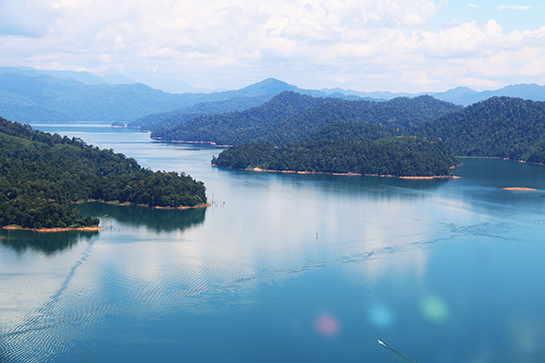
Spanning across the horizon, Kenyir Lake paints a picture of natural beauty that holds a thousand secrets. Within the ripples of its crystal-clear waves, schools of fish—both small and large—swim freely, enjoying the tranquility of nature. This makes it a truly attractive and enchanting tourist destination. The uniqueness of Kenyir Lake lies not only in its pristine waters, swaying greenery, and breathtaking hills but also in its role as the gateway to a world-renowned National Park.
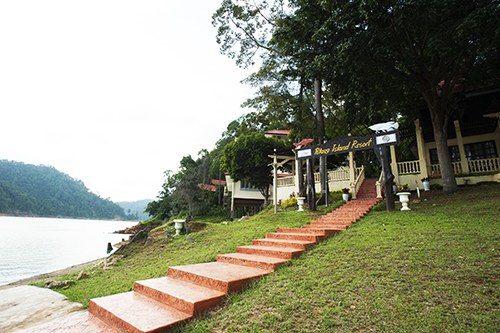
Development spearheaded by the Terengganu State Government and the Federal Government, through the Ministry of Tourism and KETENGAH, has brought a wealth of facilities to visitors. Accommodations, infrastructure, recreational areas, and prestigious events have further breathed life into the atmosphere of Kenyir Lake.
The construction of the Jenagor Dam, completed in 1986, resulted in the creation of Kenyir Lake, which submerged several existing rivers, hills, and highlands. However, peaks exceeding 138 meters in height emerged as islands that now decorate the waters of Kenyir. Consequently, 340 islands, both large and small, were formed.
Tropical Rainforest
Kenyir Lake is renowned for the lush greenery and serenity of one of the world's oldest tropical rainforests, dating back 130 million years, which serves as a habitat for thousands of species of flora and fauna. It is flanked by the Tembat Permanent Forest Reserve to the north, while the Hulu Terengganu Permanent Forest Reserve lies to the south, leading toward the National Park. With a hot and humid climate year-round, the rainforest is exceptionally fertile, nourished by the rivers flowing into the lake.
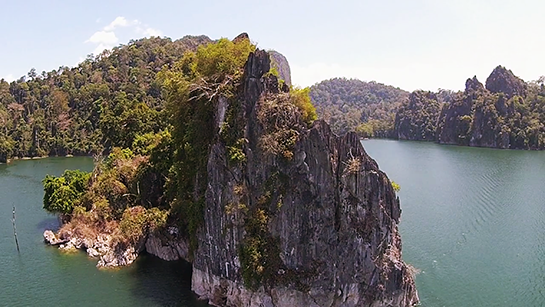
The evolution of nature is undeniable, influenced by changes in weather and climate. Similarly, the caves at Kenyir Lake are a sight to behold. For nature lovers, these caves are masterpieces of natural art, filled with uniqueness and mystery. Gua Bewah and Gua Taat are two limestone caves whose existence continues to hold unsolved mysteries. Archaeologists and historians are still working to uncover the secrets hidden within.
Artifacts such as kitchen utensils, stone axes, and woodworking tools from the Neolithic era, estimated to date back to 3000 BC, have been discovered here. Beyond these ancient relics, tourists and nature enthusiasts can explore Gua Taat and Gua Bewah to experience their beauty firsthand. For the convenience of visitors, Gua Bewah has been equipped with proper stairways and a solar lighting system. Interested visitors can also spend the night at the campsite located adjacent to the cave.
[gambar]
The highest peak surrounding Kenyir Lake is Mount Gagau, standing at 1,376 meters. Its location is unique as it marks the border of three states: Terengganu, Pahang, and Kelantan.
The Indigenous Community
Kenyir Lake is also home to an indigenous village of the Senoi people from the Semoq Beri tribe. Consisting of approximately 20 families, the village is located at Sungai Berua, about 32 km from Pengkalan Gawi and 9 km from Sungai Como.
Waterfalls
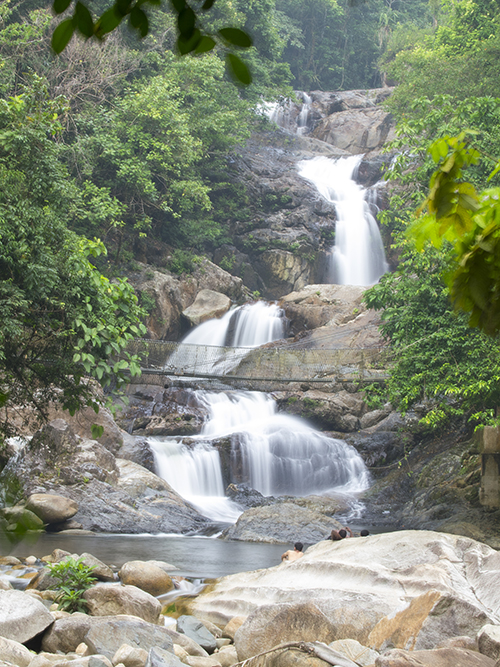
Lasir Waterfall is a household name, famed for its majestic 500-foot drop that forms natural pools at every level. Additionally, Saok, Tembat, Leban Terengganu, and Petuang waterfalls are names synonymous with the peace and tranquility of Kenyir Lake.
Other Activities to Enjoy:
Fishing
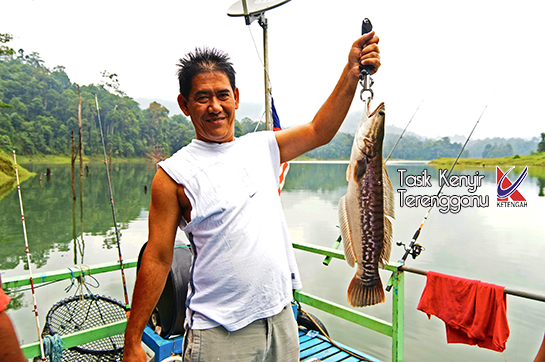
Kenyir Lake is a premier destination for angling enthusiasts. Various fish species can be found in the lake’s rivers and tributaries, including the Kelisa (Arowana), Kelah (Mahseer), Toman, Baung, Sebarau, and Lampam. Anglers are encouraged to fish in designated areas such as Pulau Cacing, Leban, Petuang, Saok, and Terenggan. Private boat operators require fishing permits from the Department of Wildlife. The lake serves as a 38,000-hectare water catchment area housing over 300 species of freshwater fish. Submerged trees act as breeding grounds, while their branches provide essential nutrients. Large-scale fish farming is also conducted in cages across several areas, yielding an estimated 60 to 100 tons of fish annually.
Camping and Jungle Trekking
For those who enjoy outdoor and rugged activities, Kenyir Lake offers camping facilities surrounded by nature—be it by the lakeside, along jungle trekking paths, or near waterfalls—promising an exhilarating experience. Popular campsites are located along the Pengkalan Gawi Jetty and Gua Bewah, as well as by the banks of the Saok, Lasir, Tembat, and Lawit rivers. Hikers who conquer the challenging trails to Mount Gagau and Mount Lawit are rewarded with serene and extraordinary panoramic views.
Bird Watching
Bird watching is a growing hobby in Malaysia, and Kenyir Lake is establishing itself as an eco-tourism destination rich in diverse flora and fauna, including resident and migratory tropical birds. Observers can enjoy the fresh morning air while taking in the natural beauty of the forest's avian inhabitants. Kenyir provides a suitable habitat where over 290 local and migratory bird species have been recorded. Notably, it is a habitat for nine unique species of hornbills, all of which can potentially be spotted in a single day. Birds of prey, such as the Grey-headed Fish Eagle and the Bat Hawk, can also be found here. A famous location for bird watching is the Sungai Buweh recreational road, located a few kilometers from the Pengkalan Gawi Jetty.
Extreme Outdoor Sports
Kenyir Lake is not only for fishing expeditions but is also an ideal location for various water sports. Often referred to as a "water sports circuit," visitors can participate in activities such as kayaking, jet skiing, rafting, and water skiing. Furthermore, Kenyir Lake hosts various international extreme sports events, including Regattas, Triathlons, fishing tournaments, extreme 4WD challenges, as well as mountain bike and motocross championships.